




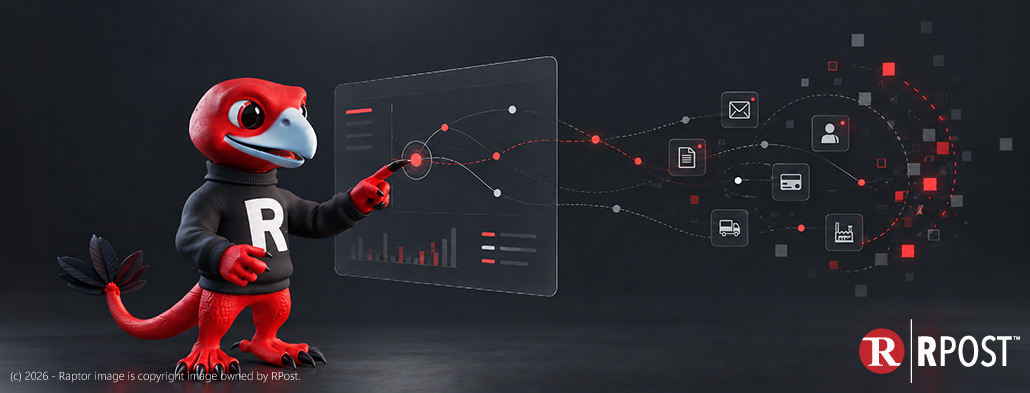
Rocky the Raptor here. After enough conversations with CIOs, CISOs, and security leaders, I keep coming back to one problem that may be more consequential than all the discussion about whether AI makes phishing better, malware smarter, or attackers more productive.
Traditional cybersecurity was built around a reasonably human rhythm - an attacker does something, telemetry appears, a security platform generates an alert, the SOC investigates, an analyst decides whether the activity is malicious, and then someone responds.
This model works when defenders have enough time between the attacker's actions and the consequences. But agentic AI is beginning to challenge that assumption. Consider what happens after a cybercriminal gains access to a supplier's mailbox. Historically, it took work: someone had to read email threads, understand relationships, identify executives, learn which invoices mattered, figure out who approved payments, study writing styles, and wait for the right transaction.
That friction was useful to defenders. Now imagine giving that mailbox to an AI agent. Months of correspondence can become intelligence remarkably quickly. The AI can identify who reports to whom, which suppliers get paid, how executives communicate, when transactions typically close, what terminology the organization uses, and which conversations contain something worth stealing.
Reconnaissance that once required patience can increasingly be compressed into minutes, and it’s only the first stage.
An agent that understands the environment can potentially help prepare the impersonation, draft messages using the vocabulary of the existing conversation, identify the person most likely to approve a transaction, monitor responses, and recommend the next move. Humans don't disappear from the attack. But one human can potentially supervise far more activity because machines do much of the reading, sorting, and preparation. This creates an uncomfortable asymmetry.
The attacker may increasingly operate at machine speed while the defender still operates at human approval speed. An alert enters the queue; it gets enriched; a tier 1 analyst reviews it; something suspicious gets escalated; another analyst investigates – perhaps the incident-response team becomes involved.
None of those steps is unreasonable. The problem is the clock. By the time conventional security sees the obvious attack, the attacker may already possess the most important advantage: context.
This is why I think cybersecurity's next important movement isn't simply toward more AI; it’s toward looking farther left in the attack sequence. Instead of beginning with: How quickly can we detect the attack? security leaders increasingly need to ask: What could we have seen before the attack became an attack?
That is the idea behind RPost's RAPTOR™ AI PRE-Crime™ cyber counterintelligence.
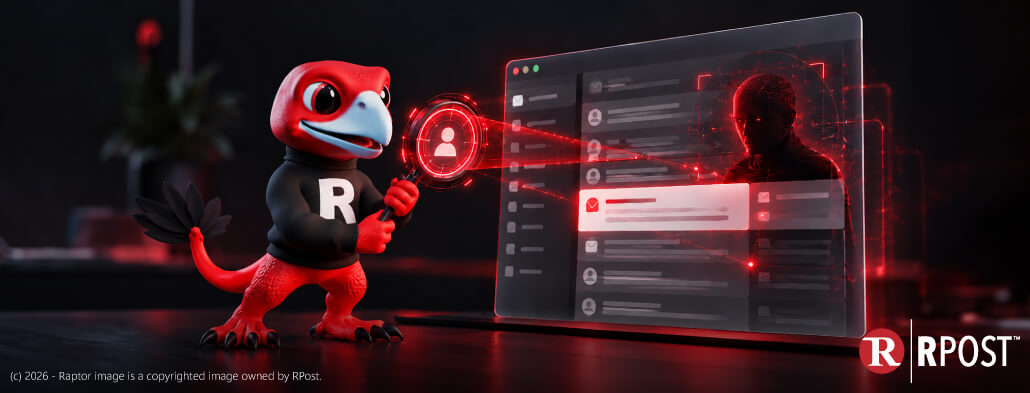
RAPTOR AI is designed to look for signals that conventional endpoint and email defenses may never see because some of the interesting activity is happening after legitimate communications leave the enterprise. A message goes to a customer, law firm, supplier, investor, or business partner. From the sender's perspective, everything looks normal. But unusual interaction with that communication can sometimes expose reconnaissance, compromised third parties, suspicious infrastructure, or other behavior worth investigating.
In other words, don't wait only for the criminal to knock on your door; look for footprints outside the window.
There is another side to this equation: deny the attacker useful context in the first place.
RPost's broader RAPTOR AI architecture combines PRE-Crime intelligence with data-protection capabilities such as Double DLP™, AI Auto-Lock™, and RDocs® Rights Protected Documents. The objective is not only to identify suspicious behavior earlier, but to retain more control over sensitive information after it has legitimately left the organization, including the ability in applicable workflows to restrict, lock, or expire content before exposure becomes damage.
That combination matters. The AI-era security race may increasingly have three clocks: how quickly the attacker can understand, how quickly the attacker can act, and how quickly the defender can see what is developing.
We probably aren't going to make cybercriminal AI agents slower. And adding another dashboard to the SOC won't make humans think at machine speed. The more interesting strategy is to change where the race begins. That is why PRE-Crime is more than a catchy name. It describes a security philosophy increasingly suited to the AI-agent era: hunt for reconnaissance, information exposure, and anomalous behavior while there is still time to do something about them.
For years, cybersecurity has competed over who can detect and respond fastest. AI may make being the fastest insufficient. The next advantage may belong to whoever sees it first.
October 09, 2026
October 01, 2026

September 25, 2026

September 18, 2026

September 16, 2026







 Blog
Blog