




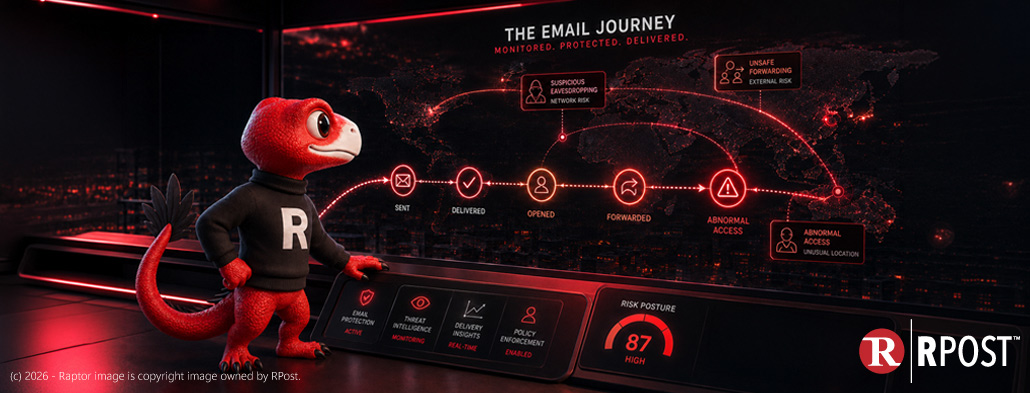
For most employees, email is still a blank box with a send button and an attachment icon. For security teams, it has become something very different - a delivery channel for attacks, a source of data leakage, an impersonation platform, and, increasingly, a reconnaissance tool for criminals and AI agents.
The cybercriminal targeting your company may not be trying to break into your network. He may already be inside the mailbox of your lawyer, supplier, accountant, or other trusted adviser. From there, the attacker can quietly read your messages, study your documents and learn how your organization works.
Rocky the Raptor here, RPost’s cybersecurity product evangelist. For years, cybersecurity strategy centered on one objective -- keep the bad guys out by building stronger firewalls, blocking phishing emails, detecting malware, and responding quickly when something slipped through.
There is a new front door into the enterprise, and cybercriminals are walking through it with stolen sessions, not just stolen passwords.
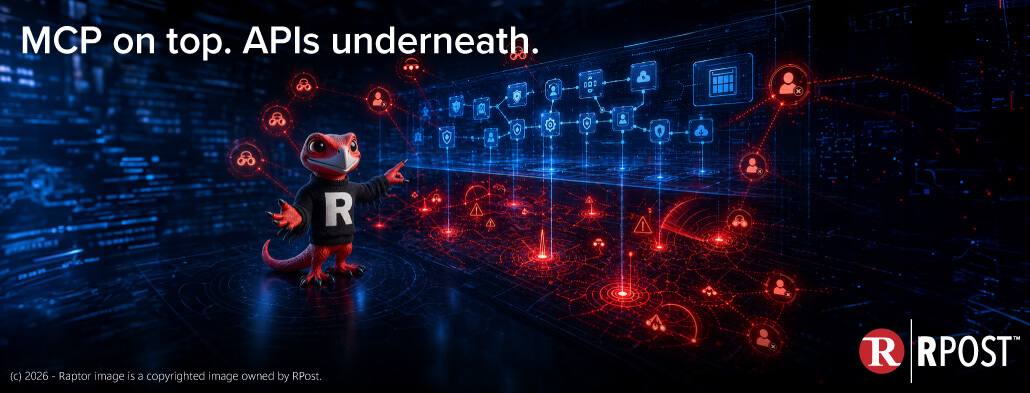
There’s a familiar rhythm in technology cycles. Something new emerges, gains traction among developers and early adopters, and almost overnight the narrative escalates from “this is useful” to “this replaces everything that came before it.”

October 09, 2026
October 01, 2026
September 25, 2026
September 18, 2026

September 16, 2026